
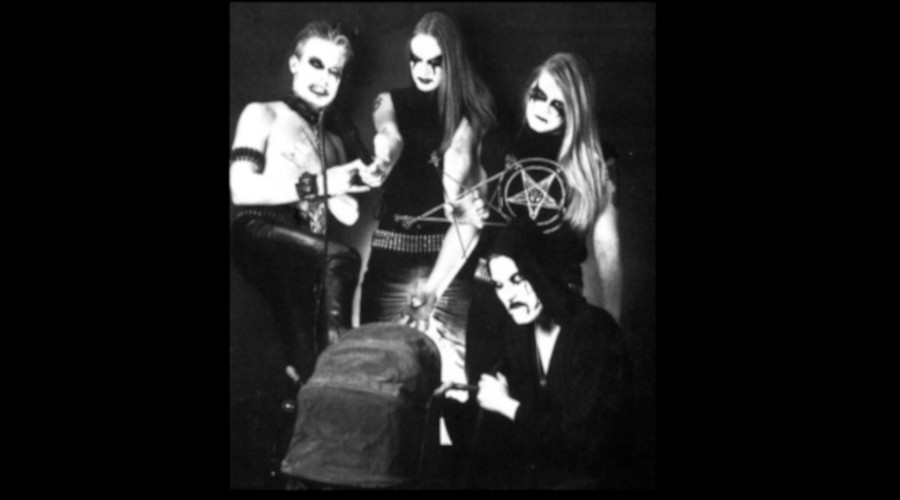
Fire in the Frozen North: The Early Days and Formation of Impaled Nazarene
The origins of Impaled Nazarene lie deep in the early 1990s underground of northern Finland, a region far removed—both geographically and culturally—from the epicenters of heavy metal. Emerging from Oulu, a cold industrial city close to the Arctic Circle, the band would go on to become one of the most notorious and uncompromising acts in extreme metal. Their early years were marked by raw ambition, chaotic lineup changes, crude recordings, and an aggressive refusal to conform—even within the already rebellious black metal movement.
The Finnish Extreme Metal Context
By the late 1980s and early 1990s, Finland was quietly developing its own extreme metal identity. While Norway was gaining international attention for its emerging black metal scene, Finland’s underground leaned toward a dirtier, more primal blend of death metal, grindcore, and punk. Bands such as Beherit, Archgoat, Abhorrence, and Convulse were crafting a uniquely savage sound—less theatrical, more violent and direct.
It was within this hostile musical climate that Impaled Nazarene formed in November 1990. Rather than aiming for atmosphere or mysticism, the band focused on speed, hostility, and provocation, drawing as much influence from hardcore punk and grindcore as from black metal itself.
Formation and Original Lineup
Impaled Nazarene was founded by vocalist Mika Luttinen, a passionate participant in underground tape-trading culture. Luttinen had already been involved in extreme music circles and brought with him a confrontational mindset rooted in shock, extremity, and dark humor.
He was joined by his brother Kimmo “Sir” Luttinen on drums, guitarists Mika Pääkkö and Ari Holappa, and bassist Antti Pihkala. From the outset, the band rejected polish or refinement. Their very name—Impaled Nazarene—set the tone, signaling provocation over subtlety.
Early rehearsals emphasized short, violent compositions built around blast beats, chaotic riffing, and sudden tempo shifts. Grindcore bands like Napalm Death were just as influential as early black metal acts, helping shape a sound that was fast, abrasive, and utterly merciless.
First Demo: Shemhamforash (1991)
The band’s first recording, the Shemhamforash demo, was released in early 1991. Like many underground demos of the era, it was crude, lo-fi, and raw to the point of abrasion. Recording quality was secondary to intent—and the intent was unmistakable.
Shemhamforash blended primitive black metal with grindcore speed and punk brevity. Songs were short, aggressive, and often under two minutes, driven by frantic drumming, buzzing guitars, and Mika Luttinen’s rabid vocal delivery. The demo circulated through international tape-trading networks, helping establish Impaled Nazarene’s reputation beyond Finland.
Crucially, the demo made it clear that Impaled Nazarene had little interest in copying the Norwegian black metal aesthetic. There was minimal atmosphere or mysticism—just blunt aggression and irreverence.
Rapid Development and Early Releases
Following Shemhamforash, Impaled Nazarene continued recording at a relentless pace. Later in 1991 they released the demo Taog Eht Fo Htao Eht, pushing their sound even further toward grindcore chaos while retaining black metal foundations.
This was followed by the Goat Perversion EP, a pivotal early release that solidified their reputation for speed and sonic violence. During this time, lineup instability became a defining feature of the band’s existence. Members came and went frequently, a common occurrence in underground bands operating with limited resources and intense creative pressure.
Despite this instability, Mika Luttinen remained the constant driving force, ensuring that the band’s identity stayed intact.
Signing with Osmose Productions
The band’s early demos eventually caught the attention of Osmose Productions, a French label that was rapidly becoming a cornerstone of the European extreme metal underground. Home to bands like Immortal, Beherit, and Marduk, Osmose provided Impaled Nazarene with international distribution and exposure.
The signing proved crucial. While offering improved recording opportunities, Osmose allowed the band to retain their raw and confrontational sound. Rather than refining their approach, Impaled Nazarene doubled down on extremity.
Toward the First Album
By 1992, Impaled Nazarene entered the studio to record their debut album, Tol Cormpt Norz Norz Norz. Although the lineup had already changed again, the band’s musical direction was firmly established.
The album preserved the grind-infused speed of their demos while introducing slightly more structured songwriting. Songs remained short, direct, and explosive, rejecting long compositions or atmospheric build-ups. This approach set them apart not only from mainstream metal but from many black metal peers as well.
 |
For a more detailed review of Impaled Nazerene’s first album click on the album covers |
Early Ideology and Attitude
In their formative years, Impaled Nazarene were driven less by ideology and more by pure antagonism. Their lyrics and imagery reflected a desire to provoke, offend, and mock conventions. Satanic themes were present, but often delivered with irreverence rather than devotion.
This confrontational stance earned both devoted supporters and fierce critics, ensuring that Impaled Nazarene would never be ignored—or forgotten.
Legacy of the Early Years
The early days of Impaled Nazarene established the core traits that would define the band for decades: speed over subtlety, aggression over atmosphere, and individuality over conformity. Their formative period captured a moment when extreme metal was still shaped by tape traders, underground zines, and fiercely independent musicians.
By the release of their debut album, Impaled Nazarene were no longer just another Finnish underground act. They were a volatile force whose foundations—laid between 1990 and 1992—would fuel one of the most uncompromising careers in extreme metal history.