
Origins of Suicidal Tendencies in Venice, California
Suicidal Tendencies were formed in 1980 by vocalist Mike Muir, a Venice native deeply influenced by the local skateboarding, surf, and street culture. At the time, Venice and nearby Santa Monica were hotbeds of punk experimentation and social tension, providing fertile ground for aggressive and politically charged music.
Inspired by early hardcore punk bands such as Black Flag, the Germs, and Dead Kennedys, Muir set out to create a band that reflected frustration, alienation, and resistance to authority. The original lineup included Mike Ball on guitar, Carlos “Egie” Egert on bass, and Amery “Ami” Smith on drums.
Early Sound, Image, and Hardcore Punk Identity
From their earliest performances, Suicidal Tendencies stood apart from other Los Angeles hardcore bands. Musically, they delivered fast, aggressive punk marked by sharp riffs, explosive rhythms, and Mike Muir’s distinctive vocal style—a mix of manic ranting and confrontational shouting.
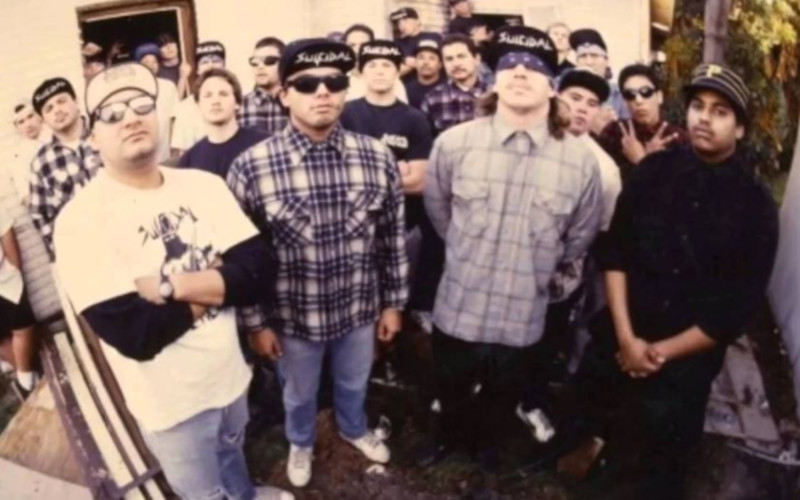
Visually, the band embraced West Coast skate culture rather than traditional punk fashion. Bandanas, flannel shirts, Vans sneakers, and a street-oriented aesthetic became synonymous with Suicidal Tendencies. This image resonated with local youth but also led to frequent misunderstandings and controversy.
Controversy, Gang Associations, and Live Show Chaos
During the early 1980s, Suicidal Tendencies were frequently associated—often unfairly—with gang activity in Venice. Their loyal and sometimes aggressive fanbase drew heavy scrutiny from police, venue owners, and city officials. As a result, the band was banned from many clubs across Los Angeles County.
Shows were often shut down due to violent slam dancing and clashes between audiences and authorities. These restrictions made it difficult for Suicidal Tendencies to tour or maintain a stable presence in the local music scene, further reinforcing their outsider status.
Debut Album and the Impact of “Institutionalized”
In 1983, Suicidal Tendencies released their self-titled debut album on Frontier Records. Recorded on a limited budget, Suicidal Tendencies captured the raw intensity of the band’s early sound while showcasing increasingly focused songwriting.
The album’s standout track, “Institutionalized”, became an underground classic. Its spoken-word verses and unforgettable chorus—“All I wanted was a Pepsi, just one Pepsi”—offered a darkly humorous take on teenage alienation and authority figures who dismiss emotional distress as insanity.
Unexpected airplay on MTV’s Headbangers Ball introduced Suicidal Tendencies to a broader audience, bridging the gap between hardcore punk and heavy metal fans.
Lineup Changes and Mike Muir’s Leadership
Despite growing recognition, the band’s early years were plagued by constant lineup changes. Creative conflicts, personal struggles, and the stress of underground touring led to frequent departures. Throughout it all, Mike Muir remained the band’s sole consistent member and creative anchor.
Muir’s unwavering vision and determination ensured the survival of Suicidal Tendencies during periods when industry support was minimal. His lyrics continued to explore themes of social control, paranoia, individuality, and loyalty to one’s community.
Legacy of the Early Suicidal Tendencies Era
By the mid-1980s, Suicidal Tendencies began evolving toward a heavier sound that would later define crossover thrash metal. However, their early hardcore punk years remain essential to understanding their influence and cultural significance.
The formation and early days of Suicidal Tendencies represent a collision of punk rock, skate culture, and street-level reality in Southern California. Against bans, backlash, and controversy, the band forged an identity that resonated with marginalized youth and helped reshape the boundaries of punk and metal.
For more great articles on Heavy Metal be sure to keep checking back on Metalhed.com as regularly as you can!