
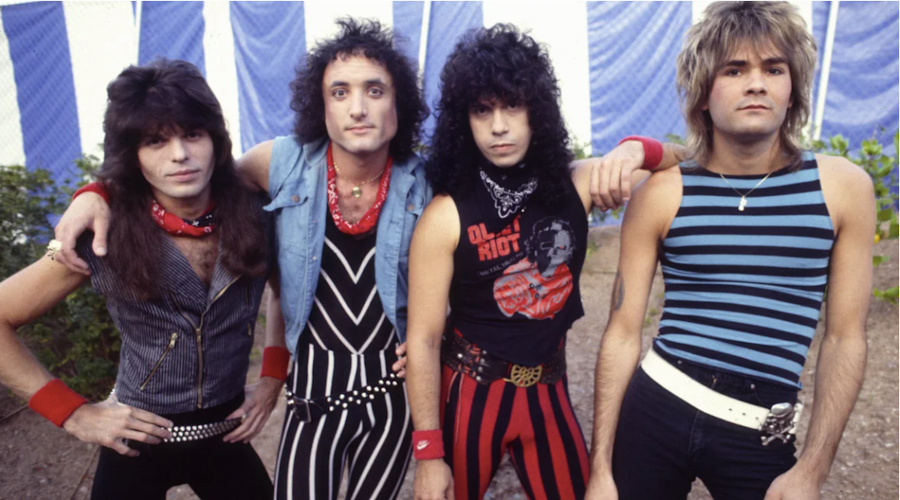
Quiet Riot: The Early Days and Formation of Heavy Metal’s First Mainstream Superstars
Before Metal Health made history as the first heavy metal album to reach No. 1 on the Billboard 200 in 1983, Quiet Riot spent nearly a decade battling lineup changes, record label setbacks, and the fiercely competitive Los Angeles rock scene. While many fans know the band for classic hits like “Cum On Feel the Noize” and “Bang Your Head (Metal Health)”, the group’s origins tell a far more compelling story of ambition, perseverance, and tragedy.
The early years of Quiet Riot laid the foundation for one of heavy metal’s greatest commercial success stories while helping shape the legendary Sunset Strip scene that would later launch bands such as Mötley Crüe, Ratt, Dokken, and W.A.S.P.

The Birth of Quiet Riot
Quiet Riot was formed in Los Angeles, California, in 1973 by guitarist Randy Rhoads and bassist Kelly Garni. Both musicians were still teenagers but already shared an obsession with the harder sounds of Led Zeppelin, Deep Purple, Black Sabbath, Slade, and Humble Pie.
Rhoads had already earned a reputation as one of Southern California’s most gifted young guitarists. Raised in a musical family, his mother owned the famous Musonia School of Music in North Hollywood, where Randy received formal classical guitar training while simultaneously developing his own innovative hard rock style.
Unlike many of his contemporaries, Rhoads blended classical influences with blues-based rock, creating a melodic and technically advanced approach that would later influence generations of heavy metal guitarists.
Kelly Garni met Rhoads while both attended John Muir Middle School. Their shared passion for hard rock quickly evolved into a determination to build a band capable of competing with Los Angeles’ rapidly expanding rock scene.
The band’s unusual name reportedly originated from an intentionally misspelled version of the phrase “quiet right.” Although unconventional, the name quickly became one of rock’s most recognizable.
Building the First Classic Lineup
Like many young bands, Quiet Riot experimented with numerous musicians before settling on a stable lineup.
Drummer Drew Forsyth joined to provide a powerful rhythmic backbone, but the final piece arrived in 1975 when vocalist Kevin DuBrow became the band’s frontman.
DuBrow possessed an unmistakable voice, boundless confidence, and remarkable stage presence. Even when performing before relatively small club audiences, he behaved like a superstar, helping establish Quiet Riot as one of the most exciting live acts on the Sunset Strip.
The definitive early lineup featured:
- Kevin DuBrow – Vocals
- Randy Rhoads – Guitar
- Kelly Garni – Bass
- Drew Forsyth – Drums
Conquering the Sunset Strip
During the mid-1970s, Los Angeles had become America’s premier destination for aspiring hard rock musicians.
Quiet Riot became regular performers at iconic venues including the Whisky a Go Go, Gazzarri’s, and the Starwood, where hundreds of bands competed nightly for the attention of fans, promoters, and record executives.
The competition was intense, but Quiet Riot consistently stood out.
Kevin DuBrow’s larger-than-life performances combined perfectly with Randy Rhoads’ extraordinary guitar skills. Audiences quickly realized they were witnessing something special.
Word spread throughout Southern California that Quiet Riot featured one of America’s most exciting young guitarists, and fellow musicians regularly attended performances simply to watch Rhoads play.

Randy Rhoads Becomes a Guitar Legend
By the late 1970s, Randy Rhoads had become Quiet Riot’s biggest attraction.
His guitar playing combined classical discipline with hard rock aggression, producing solos that emphasized melody, harmony, and precision rather than sheer speed.
While Eddie Van Halen was simultaneously revolutionizing guitar on the Sunset Strip, Rhoads forged his own distinctive musical identity. His sophisticated compositions and impeccable technique earned enormous respect from fellow musicians and industry insiders alike.
It was becoming increasingly clear that Randy Rhoads was destined for international recognition.
Success in Japan Before America
Despite becoming one of Los Angeles’ hottest unsigned bands, Quiet Riot struggled to secure a major American recording contract.
Ironically, their breakthrough came overseas.
Japanese label CBS/Sony signed the band, leading to the release of their self-titled debut album Quiet Riot in 1977.
Although unavailable in the United States, the album proved popular among Japanese rock fans and showcased the band’s energetic blend of hard rock and emerging heavy metal.
A second album, Quiet Riot II, followed in 1978, once again receiving a Japanese-only release.
Because these records were never officially released in America, they became highly sought-after imports among collectors and devoted fans.
Tensions Within the Band
Although Quiet Riot’s reputation continued to grow, internal conflicts began threatening the band’s future.
Personal disagreements between Randy Rhoads and Kelly Garni steadily intensified. According to numerous accounts, their relationship deteriorated to the point where continuing together became impossible.
Garni eventually left the band and was replaced by bassist Rudy Sarzo, whose professionalism and technical ability immediately strengthened Quiet Riot’s lineup.
However, larger challenges remained. The lack of American commercial success created financial pressures, while years of relentless club performances began taking their toll.
Randy Rhoads Joins Ozzy Osbourne
The defining moment in Quiet Riot’s early history arrived in 1979.
Former Black Sabbath vocalist Ozzy Osbourne was searching for a guitarist to launch his solo career.
When Randy Rhoads auditioned, his extraordinary playing reportedly convinced Osbourne almost immediately that the search was over.
Rhoads accepted the position, effectively bringing the original version of Quiet Riot to an end.
His departure represented a devastating loss, but it also launched one of heavy metal’s most influential careers.
With Ozzy Osbourne, Rhoads recorded the landmark albums Blizzard of Ozz (1980) and Diary of a Madman (1981), forever changing the direction of heavy metal guitar before his tragic death in a plane accident in 1982 at just 25 years old.
The Foundation for Future Success
Although Quiet Riot temporarily dissolved following Rhoads’ departure, Kevin DuBrow refused to let the band disappear.
He rebuilt Quiet Riot alongside drummer Frankie Banali, bassist Rudy Sarzo, and guitarist Carlos Cavazo.
The revamped lineup achieved the success that had eluded the original band for nearly a decade.
Released in 1983, Metal Health became a worldwide sensation, selling millions of copies and becoming the first heavy metal album ever to reach No. 1 on the Billboard charts.
Sadly, Randy Rhoads did not live to witness the commercial triumph that Quiet Riot had worked so hard to achieve.
Legacy of Quiet Riot’s Early Years
The early history of Quiet Riot remains one of heavy metal’s greatest stories of determination. Years before platinum records and MTV fame, the band endured rejection, lineup instability, financial hardship, and countless club performances while helping establish Los Angeles as the epicenter of American heavy metal.
Perhaps the band’s greatest contribution was introducing the world to Randy Rhoads, whose innovative guitar playing continues to influence musicians decades later.
Quiet Riot’s formative years demonstrate that genuine overnight success often takes years of persistence, sacrifice, and resilience. Their journey from Sunset Strip clubs to international superstardom remains one of hard rock’s most inspiring success stories.
Frequently Asked Questions
When was Quiet Riot formed?
Quiet Riot was formed in Los Angeles, California, in 1973 by guitarist Randy Rhoads and bassist Kelly Garni.
Who were the original members of Quiet Riot?
The best-known original lineup featured Randy Rhoads, Kevin DuBrow, Kelly Garni, and Drew Forsyth.
Why did Randy Rhoads leave Quiet Riot?
Randy Rhoads left Quiet Riot in 1979 after accepting an offer to become Ozzy Osbourne’s guitarist, leading to one of heavy metal’s most celebrated partnerships.
What was Quiet Riot’s first album?
The band’s debut album, Quiet Riot, was released in Japan in 1977 through CBS/Sony and was not officially released in the United States.
Why is Metal Health historically significant?
Metal Health became the first heavy metal album to reach No. 1 on the Billboard 200, helping pave the way for the explosion of mainstream metal during the 1980s.
[…] first significant step towards a professional music career came with QUIET RIOT, the Los Angeles hard rock band he formed with vocalist Kevin DuBrow, bassist Kelly Garni and […]